

Dec 14 ~ We Hear the Gospel More Clearly When We Hear Different People Deliver its Message / 3Rd Sunday of Advent
- Ottawa Lutherans Communications
- Dec 15, 2025
- 6 min read

Updated: Dec 19, 2025

Isaiah 35:1-10
Psalm 146:5-10
James 5:7-10
Matthew 11:2-11
Sermon by Pastor Joel
Think back to a moment this week, when you saw someone and instantly decided you knew their story. Maybe it was the brusque young woman in line in the grocery story, or the teenager with purple hair behind the cash at the gas station, or the dirty-looking guy at the Dollar Store. Maybe you were the one whose story was being written by some stranger and you didn’t even know it. Those of us who are white, sitting here in the pews, may never really experience this. But there is a reason why Black Canadian mothers warn their kids to be extra careful when shopping or driving; they worry about the story being written before anyone even asks their son or daughter a question.
Our brains can’t help it: we are guilty of unconscious bias, we remember the details we heard more recently, we are influenced by falsehoods presented as facts. Our brains naturally want to categorize. Don’t we learn that as young children? To sort the red blocks from the blue? The circles from the squares? The very way we learn is by dividing items up by difference. Is there any wonder that we also do it with people?
The danger of the stereotype is our gospel lesson this morning, presented to us by the questions that Jesus poses to the crowd about John the Baptist. John is in prison, and he has heard about Jesus; he sends a message to find out if it is true. Jesus sent back word to let him know of the miracles and healing he is performing, that what John predicted is coming true. “And blessed is anyone who takes no offence at me,” Jesus concludes in his message to John.
But then Jesus turns his attention to the crowd, asking them specifically about John himself: What did you go out to see in the wilderness? A reed that sways in the wind? Did you think that John was someone who would abandon his belief, or reject his own values when his life was in danger? We can imagine the crowd shaking their heads to say “no”, because Jesus asks another question: Then what did you go out to see? Someone in fancy robes who lives in a kingdom? In fact, Jesus says, the crowd met a prophet. Whether they thought John fit the image of a prophet or not, whether he was what they expected to find, Jesus is saying that John wasn’t only A prophet; he was THE prophet.
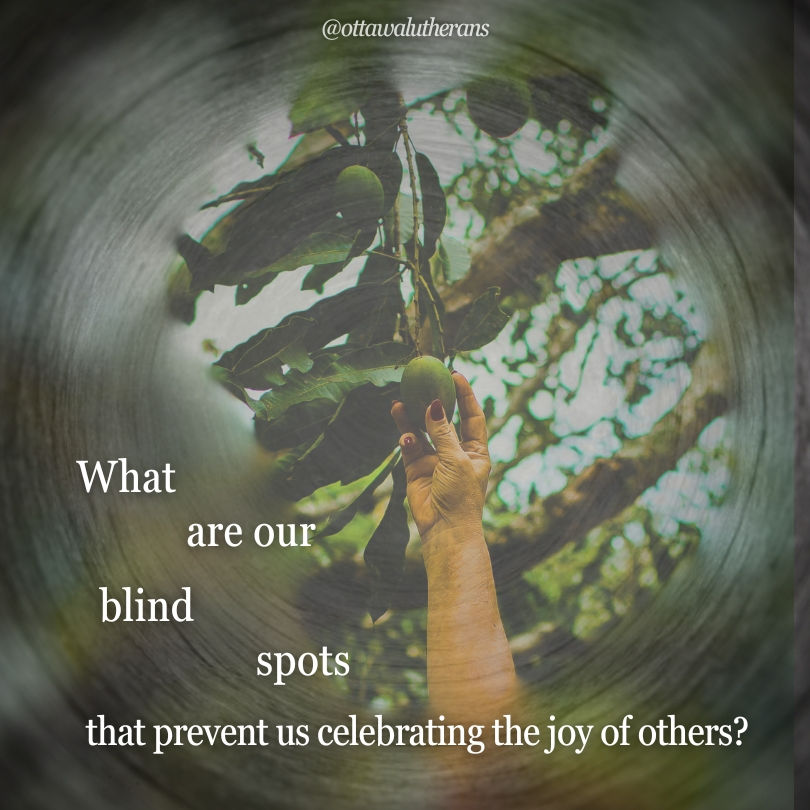
So much of Advent and Christmas is about challenging our stereotypes. In this case, the one who paved the path for Jesus was not an educated man, or even a fisherman. He was a wild man from the wilderness. He was the last person you would expect to have a line to God, or to be the opening act for Jesus. What is the lesson there for us? Surely, we, too, need to question all the times we make assumptions about people. When we assess their character by who they are, or what they do, or what they wear. Had we done that in the crowd listening to John, we would have been so busy scoffing at his smelly clothes and eccentric ways we would have missed what he had to say.
What’s more, if John is lifted first above everyone, then he is a role model for us. We don’t have to be like him in his style of shouting, angry oratory – we can choose to be soft-spoken. Those are qualities only on the surface of John: the part to emulate is his character. And most specifically what was mentioned: he was not someone who bent to the will of others in a way that dismantled his own faith.
It seems as if every few months I find one post or another by a church leader, deciding that what John really meant – in his words of last week – was that some people are good enough for God and some people aren’t. But how are we supposed to know who is who – and why does the Advent and Christmas story basically upend every stereotype? Maybe that’s the point: we can’t know, and we shouldn’t try. And really, does the gospel suggest that God is so lacking in nuance?
The “probably good enough” and the “not good enough,” “the “accepted” and the “rejected,” are the conclusions we arrive at when we get in the gospel’s way by presuming to be God. For example, I am your pastor; I try to lead you, just as I am so often led by many of you. That is our role for one another. When someone decides God also sorts people, it encourages us to the do same. Why shouldn’t we get started at what will happen in heaven anyway? What’s more, it often puts us in some kind of competition for God’s divine attention, as if there were a finite number of spots in heaven. In that case, I had better raise issues about my neighbor’s flaws so that I look better. Why would I help my neighbor, if it cost me a spot? For there to be so-called “worthy” people, there must be those who are “unworthy.” And the only way we can decide that is a shortcut kind of way with stereotypes. Otherwise, we would have to truly get to know someone, and we might find out they aren’t who we thought. We have been raised in a society that teaches us that this is how progress happens: by one person stepping over another, and so on. But is that how society really works? Or has it just created a world where we are so busy stepping up and trying not to get stepped on, that we’ve become much less likely to reach out our hands to help one another?
We should heed the caution in our second lesson: “Beloved, do not grumble against one another, so that you may not be judged. See, the judge is at the door!” The judge is God. And we cannot presume to know what God sees in someone else.
Think of what our stereotyping does each day, even aside from the great tragedies of history. I think I have told you the story about the summer between university years when I worked as a plumber. If so, indulge me again. After work, dirty and in construction boots – probably doing my best version of John the Baptist’s style – I went to cash a cheque. I was turned down because I didn’t have enough money in my account and was told I’d have to wait five days. I went home, got dressed in my suit, and went back to the bank. (I wasn’t going to make it 5 days without money) And guess what? They did it, no questions asked. It was the exact same cheque. I was the same person. But they saw me with different eyes.
I learned a huge lesson that day, which is probably why I remember it so clearly, and love to keep sharing it. I learned that when I present myself in a different way, people decide my story before I have a chance to share it with them. Sometime the joke’s on them – like when I used to accompany Erin to prenatal appointments with my collar on, to raised eyebrows. Sometimes it makes you angry for the sake of others –as it did when I was judged at the bank. What of the person who can’t go home and put on fancier clothes? Sometimes it is dangerous – as marginalized people in Canada have too often learned.
We are in a time in North America when we need to begin asking ourselves, and one another, to think about the stereotypes we hold – sometimes without even knowing it. And we need to resist any law that treats people like red or blue blocks to be so easily sorted.
The next time we go looking for a prophet in soft robes, Jesus might suggest we recall John the Baptist. We can hear the truth of the gospel more clearly only when we are more open to hearing different people deliver its message. The message is coming: Advent is the time for us to think deeply and look broadly to receive it.
Amen


Comments